Yes, you can teach yourself sewing — with honest caveats
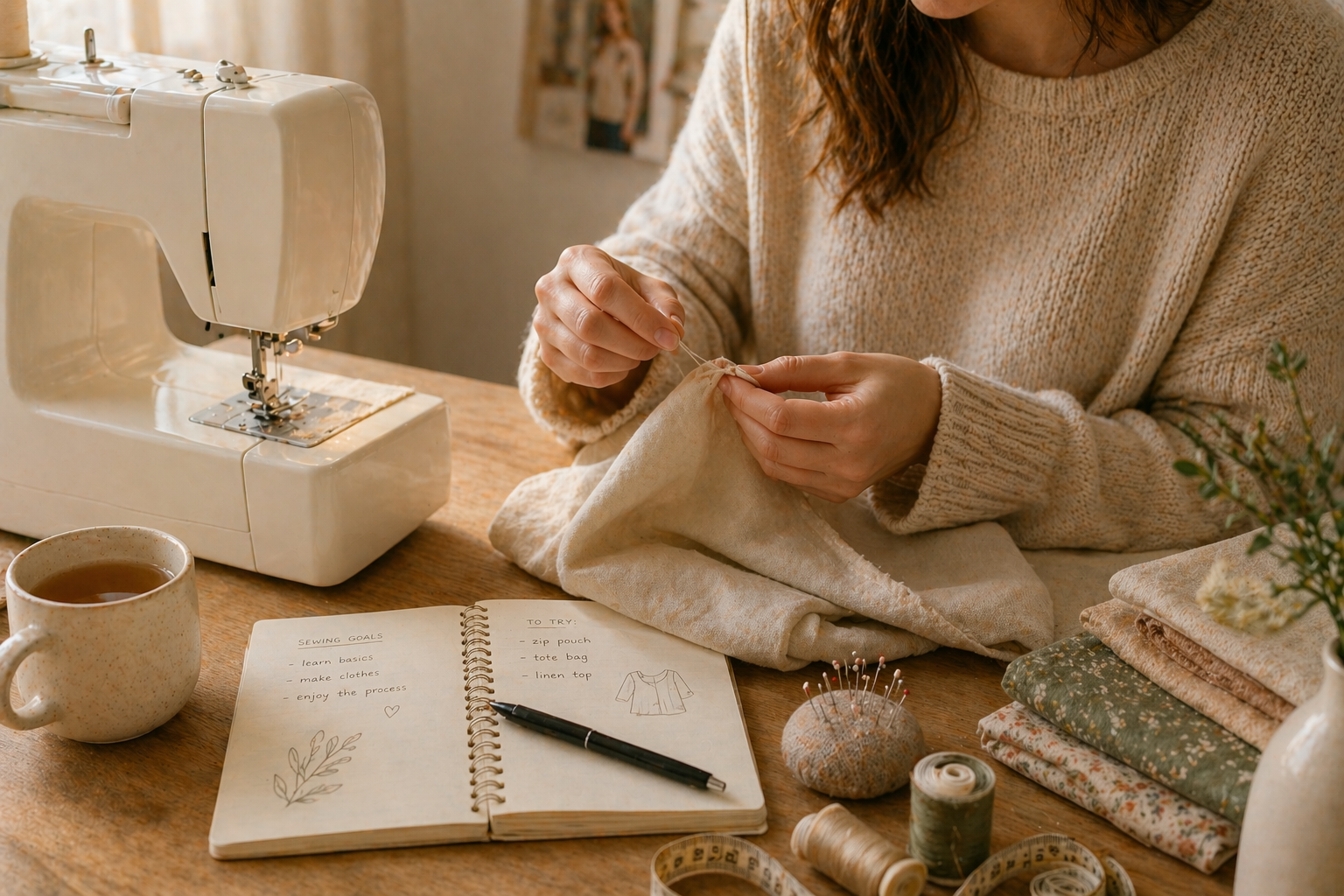
Sewing is the hardest of our four crafts to self-teach well. That's not because the skills are inherently harder — it's because sewing starts with a machine, and a machine has more things that can go wrong without someone standing next to you.
Threading, tension, bobbin winding, pressure foot changes, needle choice, stitch length, seam allowances, pressing order — every one of these is easy to demonstrate in a minute and frustrating to figure out alone when something's going wrong. A dropped stitch in knitting is fixable; a machine that keeps birds-nesting its bobbin thread can feel unfixable without a second opinion.
That said, plenty of sewists are self-taught. YouTube has excellent machine-specific content, and the modern beginner sewing community (Reddit, TikTok, Discord) is unusually helpful. If you're patient and happy troubleshooting, self-teaching works. If you'd rather skip the troubleshooting phase, this is the one craft where we genuinely recommend paying for a course.
What's harder to self-teach than people expect
Three specific things trip up self-taught sewists more than they anticipate.
The machine itself. Threading a modern machine is an 8–10 step process, and every brand does it slightly differently. A good YouTube video for your exact model (search 'threading a Brother LX17' or your model number) is essential — not a general sewing tutorial. Most self-teachers underestimate how much time they'll spend on the machine alone in week one.
Pressing. This sounds unglamorous, but pressing seams between sewing steps is what separates a homemade-looking garment from one that looks bought. Self-taught sewists often skip it because no one's standing over them insisting. A cheap iron and a 30-second press between every seam transforms results.
Fitting. Getting garments to fit your body is a genuinely advanced skill that takes a year or two of practice regardless of how you learn. Self-teachers hit this wall around month 3–4 and sometimes give up because it feels unfixable. It's not — there are resources for it — but it's the longest-tail part of sewing.
The fastest free self-taught path
For the machine: find a YouTube video specific to your exact machine model, threaded start-to-finish. Watch it three times. Do it with the machine alongside. Don't watch general 'how to thread a sewing machine' videos — brand-specific beats generic.
For the stitches and basics: the three channels we recommend are Made to Sew (Alison Smith — genuinely the clearest teacher for beginners, highly structured), Professor Pincushion (strong for troubleshooting and machine issues), and Melly Sews (excellent for first projects with free beginner patterns).
For first projects: start with a tote bag, then a cushion cover with an invisible zip, then an elasticated skirt or pyjama bottoms. These are the three canonical first projects that build skills in the right order — straight lines, zips, pattern pieces.
When a paid course is really worth it (and for sewing, it usually is)
For sewing specifically, we lean harder towards recommending a course than for any other craft we cover. The reason: the first 10 hours of sewing are mostly about demystifying the machine, and that's exactly what a good course does in its first 3–4 lessons.
Our top pick is Julia Bobbin's Sewing for Beginners — Machine Confidence on Skillshare. She spends the first three lessons entirely on machine setup, threading, tension and troubleshooting. By lesson 5 you're sewing a tote bag, and by lesson 16 you've finished both a tote and a cushion cover with an invisible zip. £11/month subscription (free trial covers the whole course), or about a tenner if you cancel after finishing.
For a one-off purchase alternative, Domestika's Sewing Essentials is our close second — same level but with a linen apron project. Full reviews in our best sewing courses roundup.
How long does self-taught sewing take?
Realistic self-taught timeline, practising one 2-hour session once or twice a week: first session, machine setup only — no sewing. Session two, first straight lines on scrap. Week 2, a finished tote bag. Week 3–4, a cushion cover with an invisible zip. Month 2, first garment (elasticated skirt or pyjama bottoms). Month 3–4, a wrap skirt or simple shirt. Month 6 onwards, fitted garments and working with pattern sizing.
Full timeline in our how long to learn sewing guide.
Self-taught sewing is about 2–3 weeks slower than course-taught — slightly more than the gap for other crafts. That's mostly the extra time figuring out machine-specific troubleshooting without a guide.
Machine choice matters more than you'd think for self-teachers
A beginner-friendly machine with clear markings transforms self-teaching. A complicated computerised machine with 50 stitches becomes harder to learn alone, not easier — you've got more settings to get wrong.
Our pick for self-teachers is a Brother LX17 (~£109) or similar mechanical beginner machine. Clear threading diagram printed on the machine itself. Simple stitch selector dial. One-step buttonhole. Nothing computerised to break. Full guidance in our do I need an expensive sewing machine post.
If you've inherited an old machine, find the manual online before starting. Vintage machines are beautiful and often still work, but threading them without instructions is genuinely harder than self-teaching on a new one.
What to do if you get stuck
For machine problems (thread keeps breaking, bobbin tangles, needle won't pick up thread), the /r/sewing subreddit is extraordinary — post a photo of the problem and an experienced sewist will diagnose it within hours. For stitch and technique questions, the Sew Over 50 Facebook group and the Curvy Sewing Collective are generous with help.
Most self-taught sewists' biggest struggle isn't a specific technique — it's the sense that something's 'off' but not knowing what. If that's you, book a 1-hour in-person lesson at a local sewing school. A single hour with an experienced teacher can unstick six weeks of stalling.