What makes a good handmade embroidered gift?
Three things. It should be small enough to finish — big pieces are ambitious for a beginner and easy to abandon. It should be personal, because 'handmade' and 'for you specifically' combine to make embroidered gifts deeply appreciated. And it should use stitches you've practised — first-attempt French knots on the gift itself is a recipe for frustration.
Every project below fits all three bars. None require techniques beyond the first month of embroidery: running stitch, back stitch, satin stitch, French knot, stem stitch, chain stitch.
1. Small botanical hoop (6–10 hours)
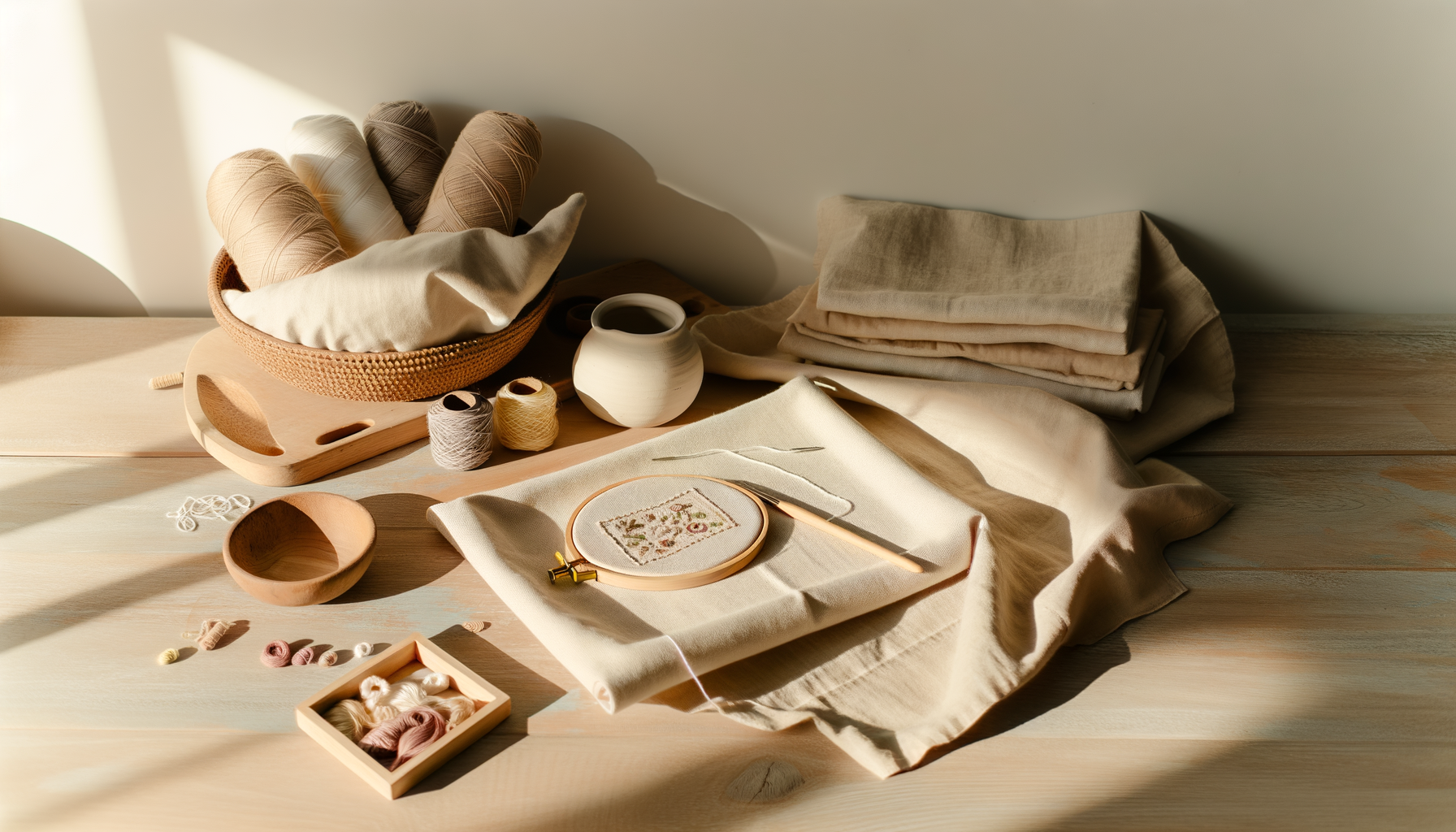
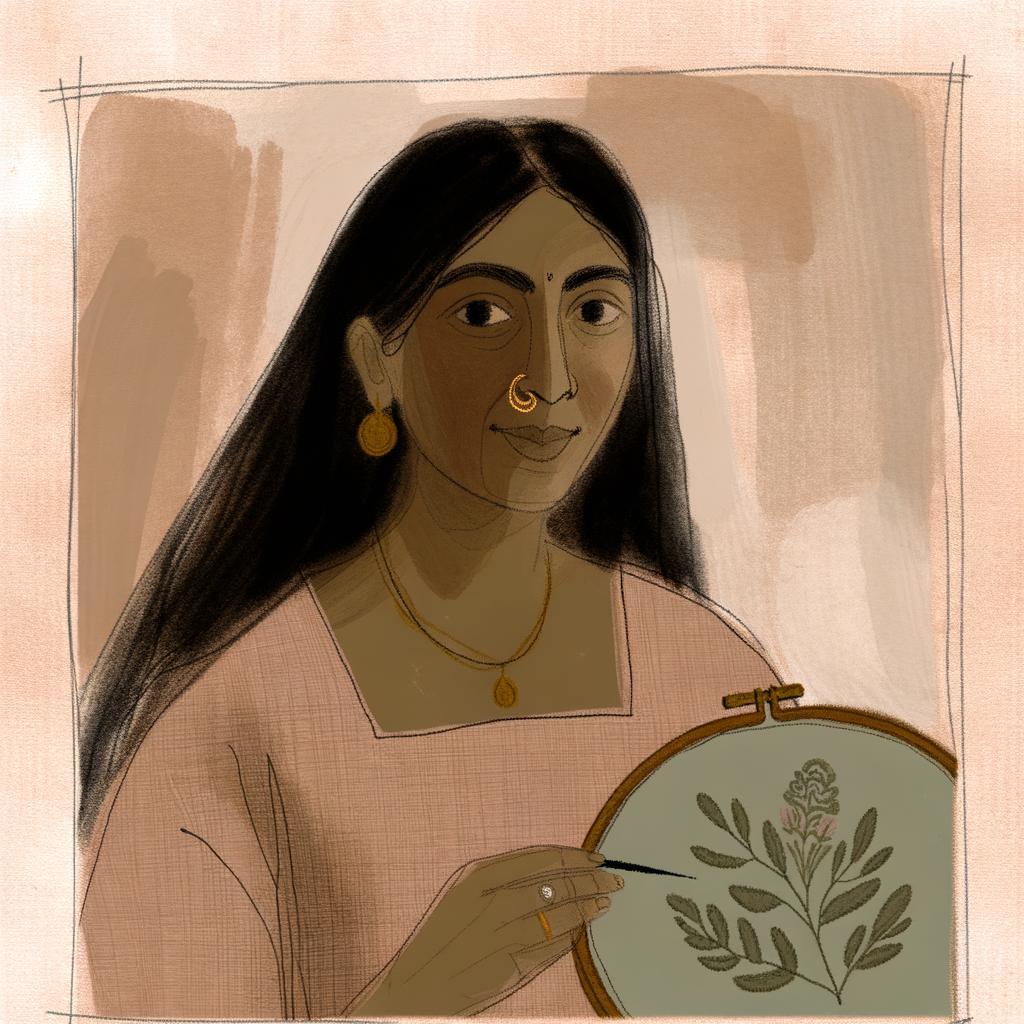
The classic giftable embroidery project. A 4- or 6-inch wooden hoop with a simple botanical design — a few stems, leaves and flower heads in tonal greens and one accent colour — reads as artful and hand-crafted without taking 30 hours.
Use a 4- or 6-inch beech wood hoop, a tightly-woven cotton or quilting linen, DMC six-strand floss in 4–5 tonal colours, and John James crewel needles. Jessica Long Embroidery sells brilliant beginner-level botanical kits at around £18–25 that include fabric, floss, needle and pattern.
If you've finished the ending project from Adriana Torres' Contemporary Embroidery for Beginners, you already have the skills for a small botanical hoop. Total cost: ~£18 with kit, ~£10 with loose materials. Total time: 6–10 hours over a week.
2. Monogrammed handkerchief or tea towel (3–5 hours)
A single monogrammed initial in neat back stitch or satin stitch on a plain white cotton handkerchief or tea towel is one of the highest-ratio gifts we know — minimal work, deeply personal, genuinely used.
Use a plain white cotton handkerchief (around £3–5) or a linen tea towel (around £6–10). Print a letter in a font you like (serif like Baskerville reads well in embroidery), trace it onto fabric with a water-soluble fabric pen, and work in back stitch (for outline letters) or satin stitch (for filled letters). DMC embroidery floss in a single colour is all you need.
3–5 hours for back-stitch monograms, 5–8 hours for satin-stitch filled letters. Total cost: ~£10 including fabric. A genuinely gift-worthy piece for a small evening's work.
3. Embroidered greeting card (2–3 hours)
A card-size piece of embroidery mounted onto a plain card blank is a small, frameable keepsake that doubles as a greeting card — perfect for a milestone birthday, new home, or wedding.
Work a simple design (flowers, a small word, a house outline) on a 8×10 cm piece of linen or cotton, then mount onto a plain blank card using double-sided tape or PVA glue. StitchCrafty and Miniature Rhino both sell card-embroidery templates; or use a pre-printed card-sized piece of linen from an embroidery supply shop.
2–3 hours per card. Total cost: ~£5 per card. Ideal for when you want 'handmade' without a multi-hour commitment.
4. Hoop art with a name or short quote (5–8 hours)
A 6-inch hoop with a name, a child's birth date, or a short sentimental quote (couples' wedding date, a favourite song lyric, a new-baby announcement) is one of the most kept-and-displayed gifts we've tracked.
Choose a script font and a mid-sized hoop size. Work text in back stitch (fast, crisp) or chain stitch (more decorative, slightly slower). Add a small surrounding motif — a wreath, stars, or a leafy border — to fill the hoop.
Free beginner templates: Sarah Homfray Embroidery's free 'Hoop Art Alphabet' downloadable on her site; or any of the DMC free patterns from their Mon & the Cosmos or Stitcher's Retreat collections. Total cost: ~£10. Total time: 5–8 hours spread across a few evenings.
5. Small stitch sampler (8–12 hours)
A sampler — a rectangle of fabric featuring rows of different stitch types — is a thoughtful gift for another crafter, or a beautiful piece for someone who values 'slow' aesthetics. It's also genuinely useful as a gift because the skill it demonstrates is legible even to non-embroiderers.
Use a larger piece of cotton or linen (roughly 15×20 cm) framed in a rectangular hoop or mounted on stretcher bars. Work 5–7 rows of different stitches: running, back, stem, chain, satin, French knot, feather stitch. Use a single thread colour for a clean minimalist finish, or gradients of one colour family.
Mollie Johanson's 'Beginner Sampler' is a well-known free pattern; the Sublime Stitching 'First Stitches' sampler is another beginner-friendly option. Total cost: ~£12. Total time: 8–12 hours — slower because each row uses a different technique.
6. Embroidered canvas tote (5–8 hours)
An embroidered addition to a plain canvas tote bag — a small design on one side, or a monogram — produces a wearable, kept-and-used gift.
Start with a blank canvas tote (around £5 from craft shops or Amazon). Stretch a small section in a hoop while you embroider. Use thicker embroidery thread (DMC Pearl Cotton, or six-strand floss used 6-strands-at-once) — it reads more boldly against canvas than fine embroidery thread.
Designs that work well: a short word ('BRUNCH', 'BOOKS', a name), a small icon (a coffee cup, a single flower stem), or a monogram. Keep the design under 8 cm for a beginner. Total cost: ~£8. Total time: 5–8 hours.
Which gift to pick for which person
For a close friend or family member: the name-hoop or monogrammed handkerchief. Personalisation is what elevates these gifts.
For a new-home or wedding gift: the botanical hoop or the sampler. Both look at-home on a wall or shelf.
For a birthday or sentiment-heavy occasion: the quote hoop or embroidered card. Short, personal, keepsake-worthy.
For a colleague or friend's child: the canvas tote. Practical, wearable, feels like thought went in.
What to avoid as a first embroidered gift
Ambitious portraiture (pets, people) on your first attempts — likeness is genuinely hard and disappointing when it doesn't land. Large detailed pieces (anything over 8-inch hoop) — too many hours, too much commitment. Very fine-thread work (split stitch, long-and-short in multiple colours) — saves this for your third or fourth piece.
Stick to small, simple, high-impact designs for gifts. The restraint reads as intentional.