What is single crochet?
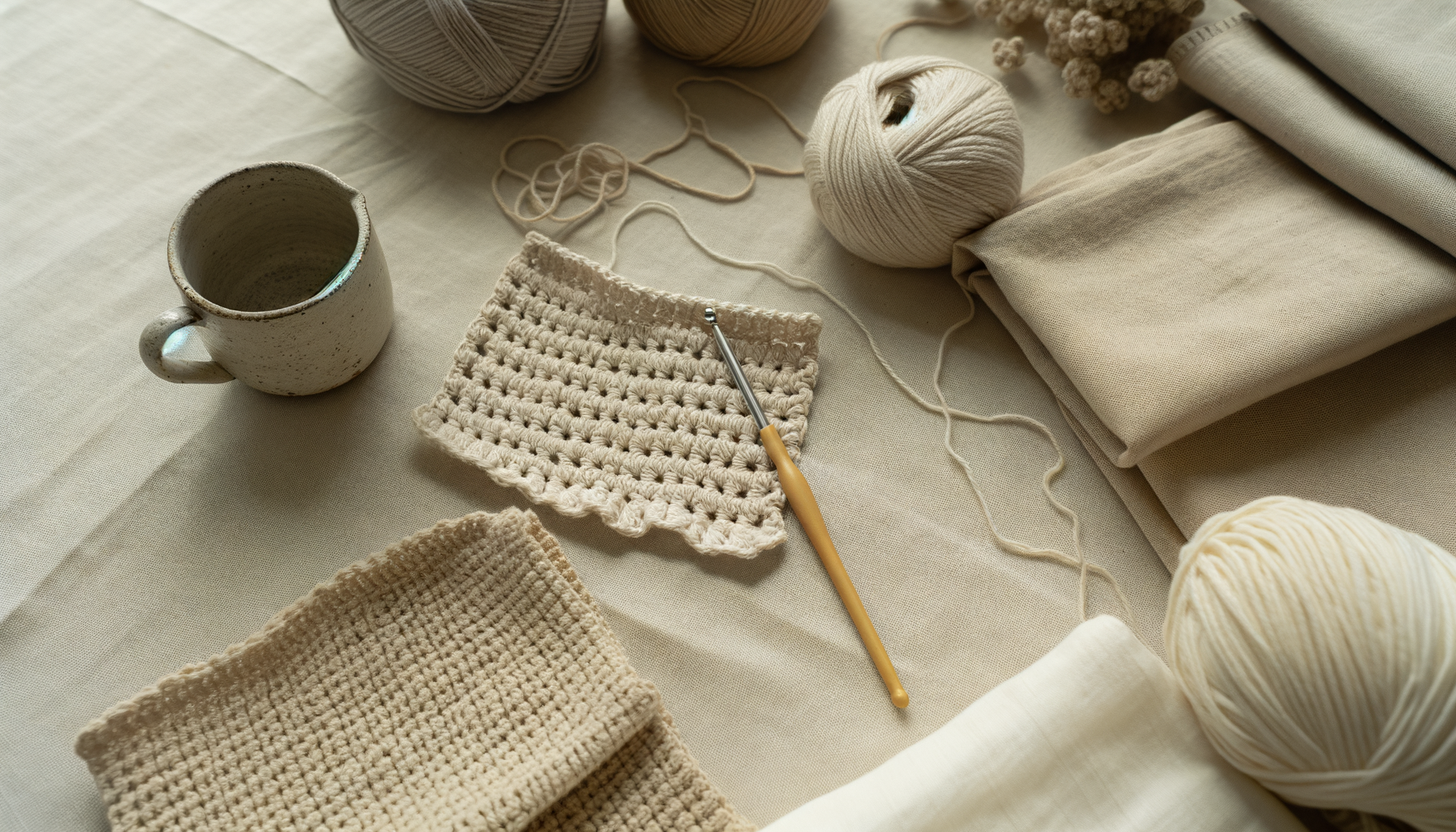
Single crochet (abbreviated 'sc' in US patterns) is the shortest real stitch in crochet. It creates tight, dense fabric that holds its shape — which is why it's used for structured projects like amigurumi, market bags, dishcloths and the bodies of most beginner hats.
One quick terminology warning: in UK crochet patterns, 'single crochet' doesn't exist as a name. What US patterns call single crochet (sc), UK patterns call double crochet (dc). This is a common source of confusion — our how to read a crochet pattern guide explains the UK/US difference in detail. This tutorial uses US terminology.
Single crochet is the stitch most beginners learn second (after chain stitch) and is the foundation for almost everything that follows. Get comfortable with it before moving to taller stitches like double crochet or decorative patterns like bobble or shell stitch.
What you'll need
For your first single crochet practice: a 5mm crochet hook (we use the Clover Amour for its ergonomic handle; full kit breakdown on our crochet starter kit page), a ball of smooth light-coloured DK yarn (Paintbox Simply DK in a mid-tone colour is ideal — about £2.80 per ball), and scissors.
Avoid dark or fuzzy yarn at this stage — stitches become invisible, which makes mistakes frustrating to find. A light cream, pale blue or soft yellow gives the clearest view of your stitches.
How to single crochet — step by step
Prerequisite: you need a foundation chain to work into. If you're not yet confident with chain stitch, our basic crochet stitches for beginners guide covers it.
Step 1. Make a foundation chain of about 15–20 stitches. Keep your tension moderate — too tight makes the chain hard to work into.
Step 2. Locate the SECOND chain from your hook. (Don't count the loop currently on the hook — start counting from the chain right next to it.)
Step 3. Insert your hook into the second chain from the hook. Push the hook through the 'top two loops' of the chain (the V-shape you can see on top).
Step 4. Yarn over. (This means wrap the yarn over the hook from back to front.)
Step 5. Pull the yarn through the chain. You now have 2 loops on your hook.
Step 6. Yarn over again.
Step 7. Pull through BOTH loops in one motion. You should have 1 loop left on your hook. That's one single crochet.
Step 8. Repeat steps 3–7 into each chain across the row.
Step 9. At the end of the row: chain 1 (this is the turning chain — it gives you the height to work the next row). Turn your work so the other side faces you.
Step 10. Work single crochet into each stitch across the next row. Insert your hook under the top two loops of each stitch (not into the chain-1 turning chain at the end — that would add an extra stitch).
Continue this pattern for as many rows as you want. Your fabric should grow as a neat rectangle.
Common single crochet mistakes (and quick fixes)
Working into the wrong chain. Beginners often work into the first chain instead of the second. Always count: the loop on your hook doesn't count, the next chain down IS chain 1, and you want to work into chain 2.
Skipping the first or last stitch of a row. Your rectangle starts coming out triangular. Fix: mark the first and last stitches of each row with locking stitch markers until you can identify them by feel.
Gripping the hook too tightly. Your stitches come out small and hard to work back into. Fix: consciously relax your grip every few rows. The hook should move easily through the loops.
Losing count of stitches. Every row should have the same number of stitches. Fix: count every row for your first week, or mark every 5th or 10th stitch with a stitch marker.
Accidentally adding a stitch at the end of a row. Usually because you're working into the turning chain from the previous row. Fix: identify exactly where the last 'real' stitch is and stop there.
Three projects where single crochet shines
A cotton dishcloth or washcloth. The canonical first project. Use 100% cotton DK yarn (Paintbox Simply Cotton DK) on a 5mm hook. Chain 30, then work single crochet rows until the piece is a square. 2–3 hours of work, and it's a finished, useful object.
Amigurumi (crocheted toys). Amigurumi is almost entirely single crochet worked in a spiral with increases and decreases. If you plan to make stuffed animals eventually, single crochet is the most important stitch to nail.
A market bag or tote. Single crochet's density creates structure — perfect for a bag that needs to hold shape. Our best crochet projects for gifts guide has specific market bag patterns.
What to learn after single crochet
Once single crochet feels automatic (usually after a finished dishcloth or two), the natural next steps are: double crochet — taller, faster, used for blankets and shawls; half-double crochet — in between in height, drapes beautifully; and working in the round (for amigurumi, hats and bags). Start with double crochet — it's the most widely used stitch in beginner patterns beyond dishcloths.
Our basic crochet stitches for beginners guide covers all six foundational stitches in order.